Summary
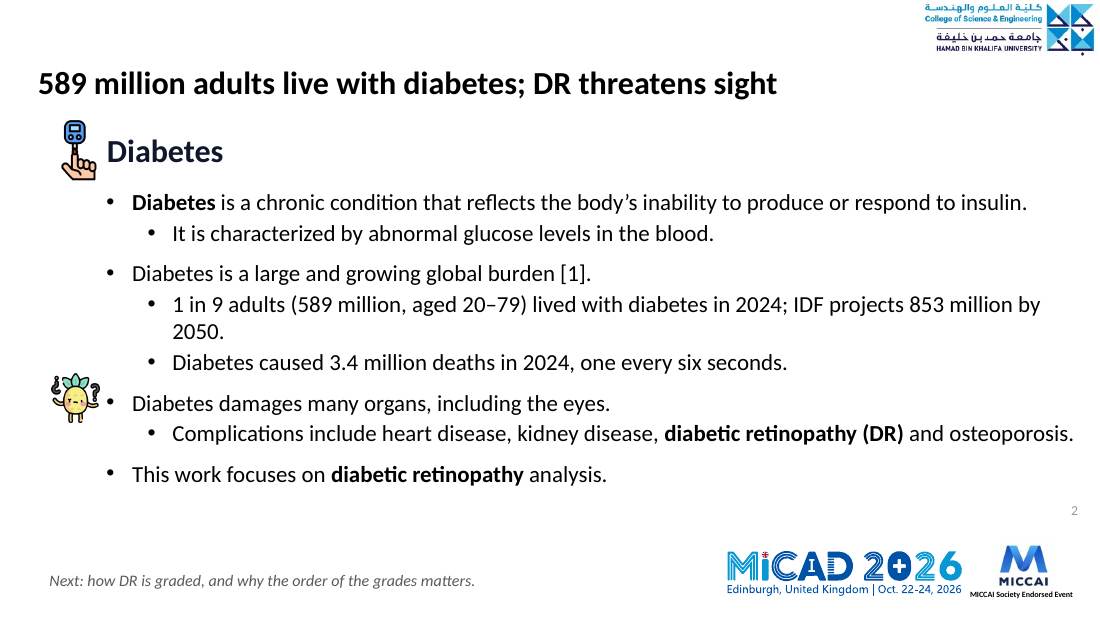
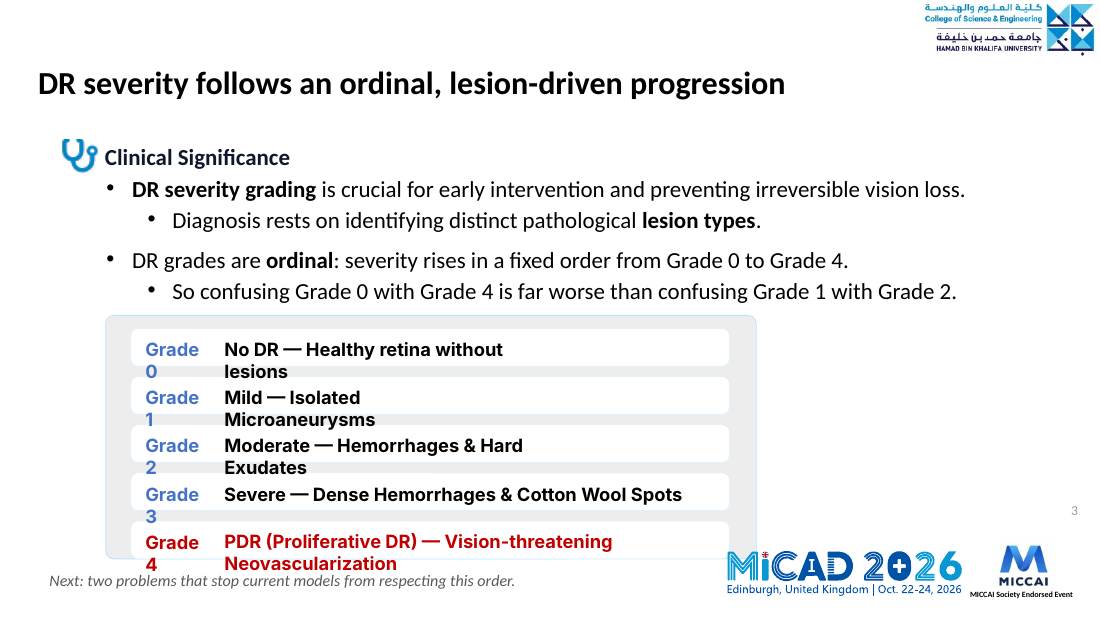
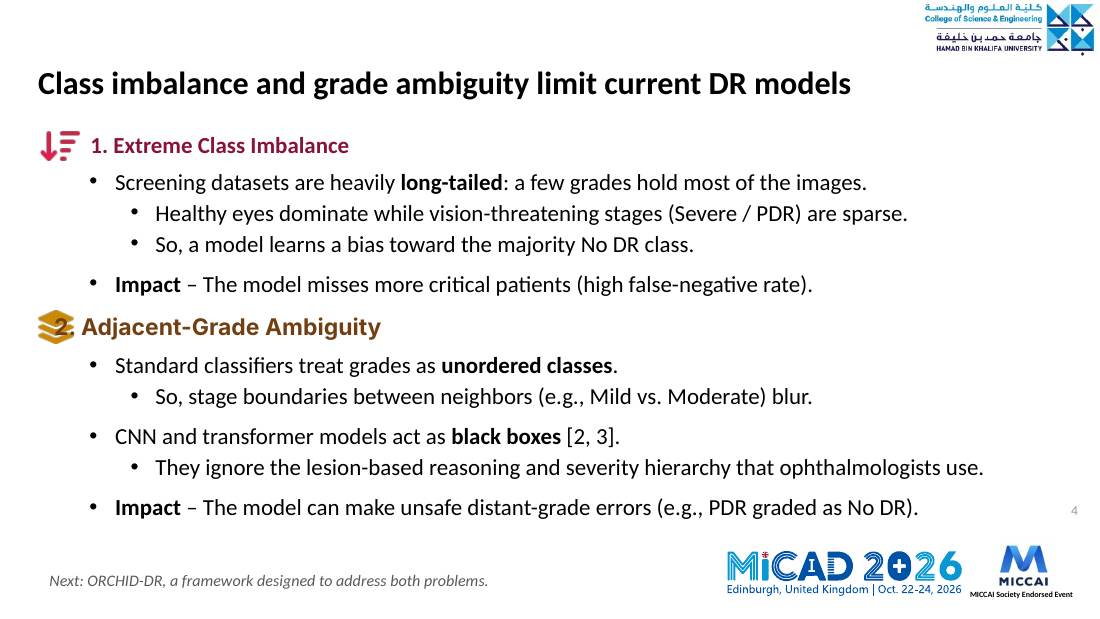
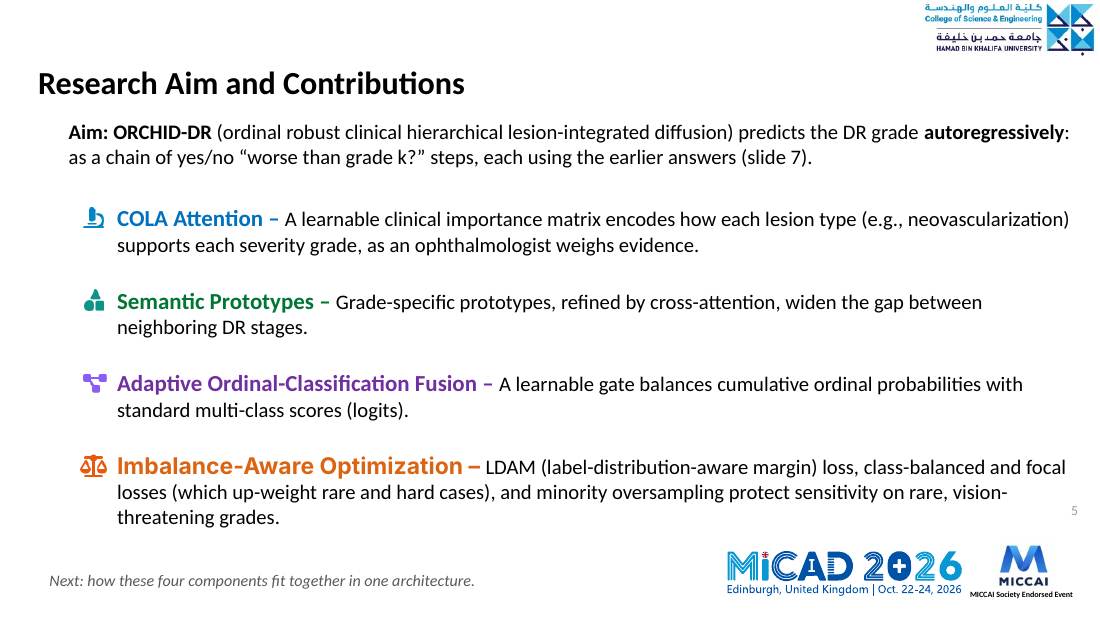
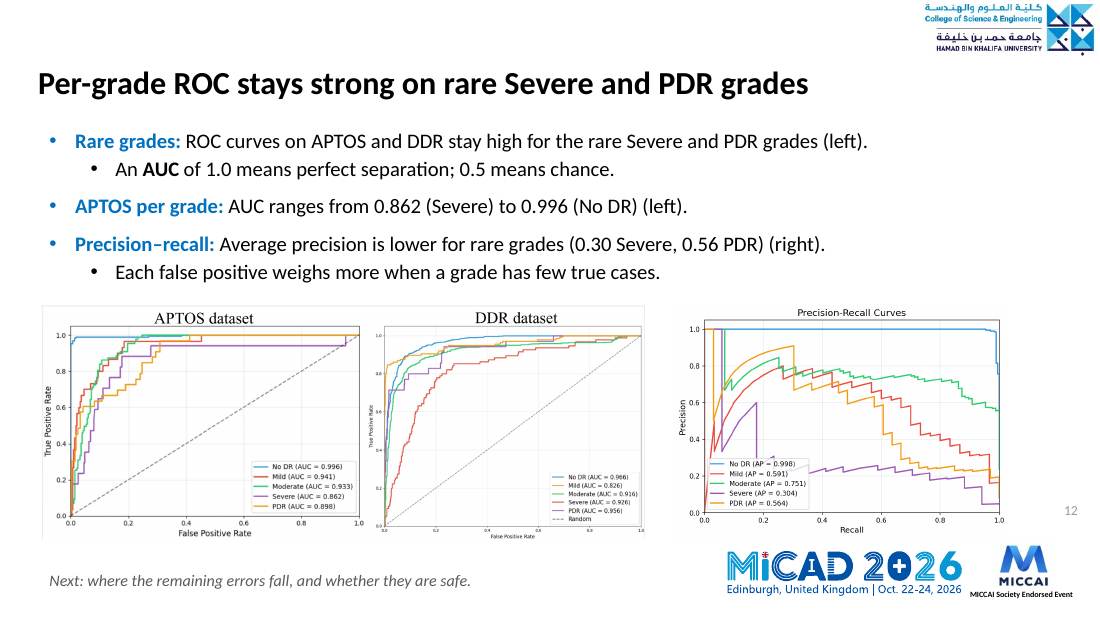
Diabetic retinopathy threatens the sight of many of the 589 million adults living with diabetes. AI grading models struggle because screening datasets are dominated by healthy eyes, while the vision-threatening grades are rare and neighbouring grades look alike.
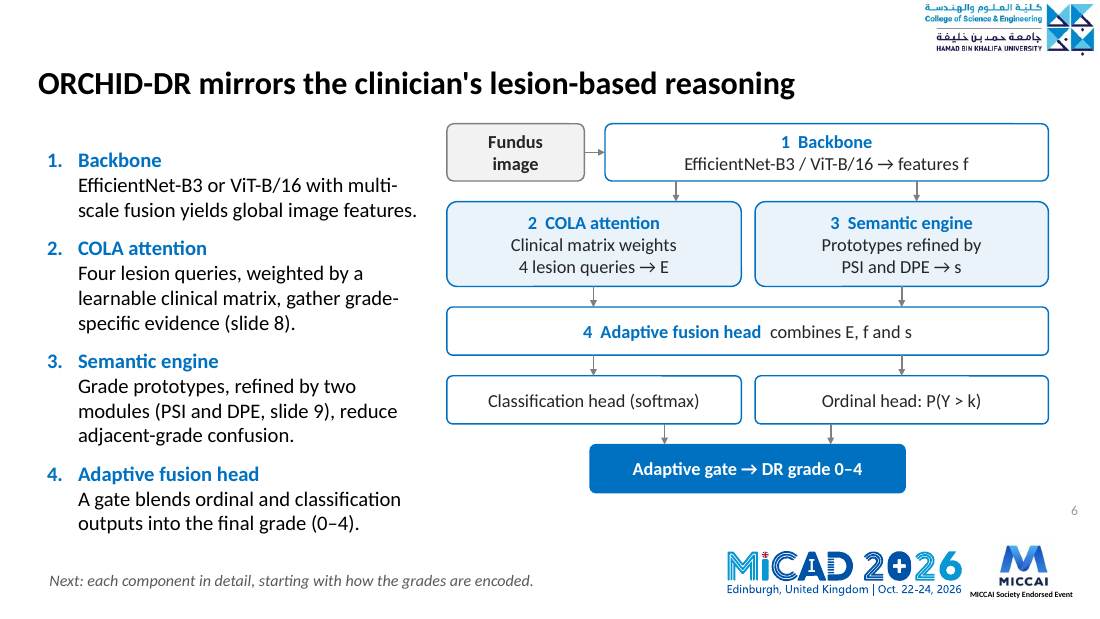
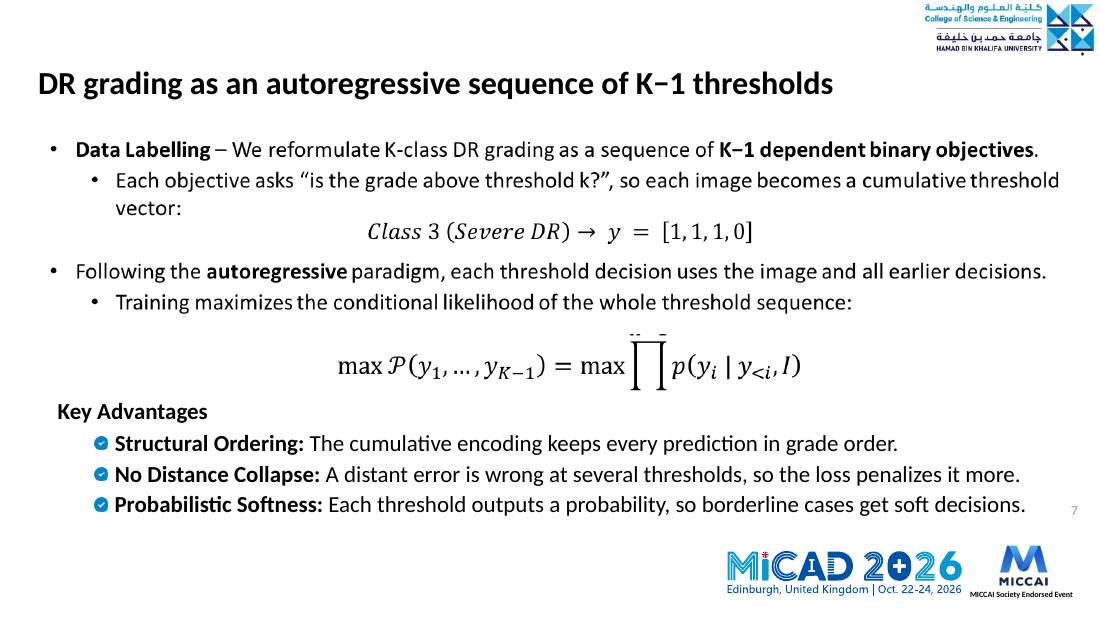
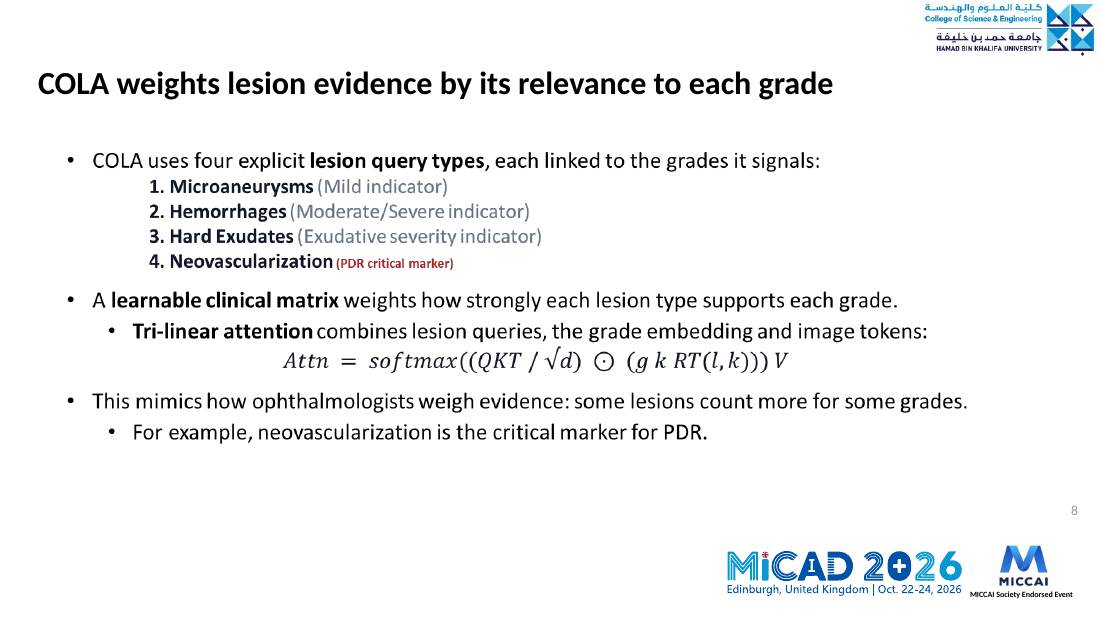
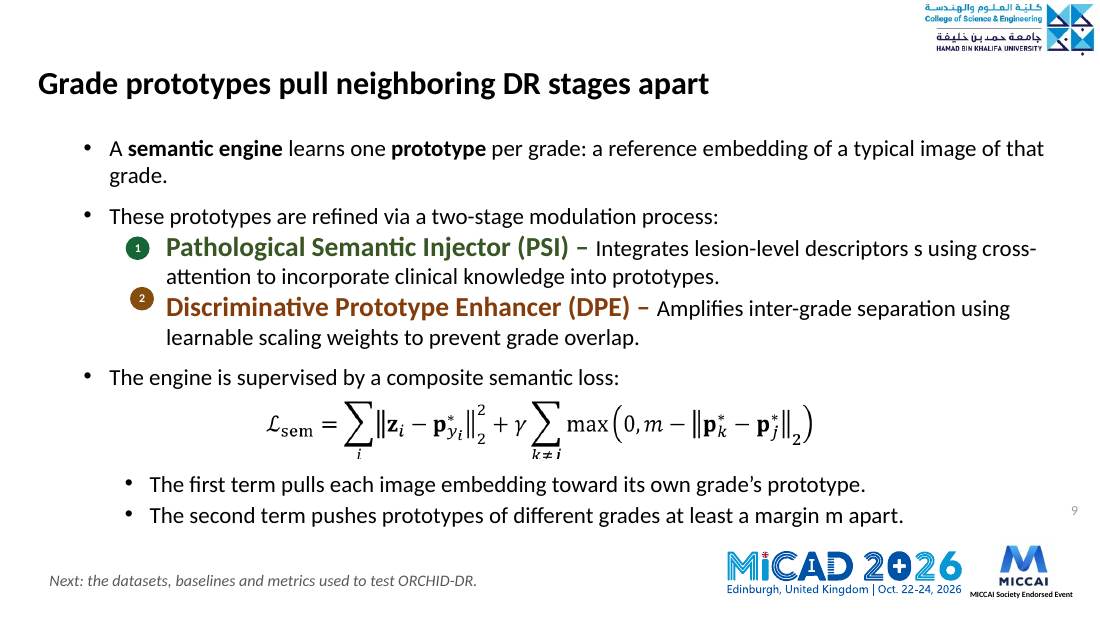
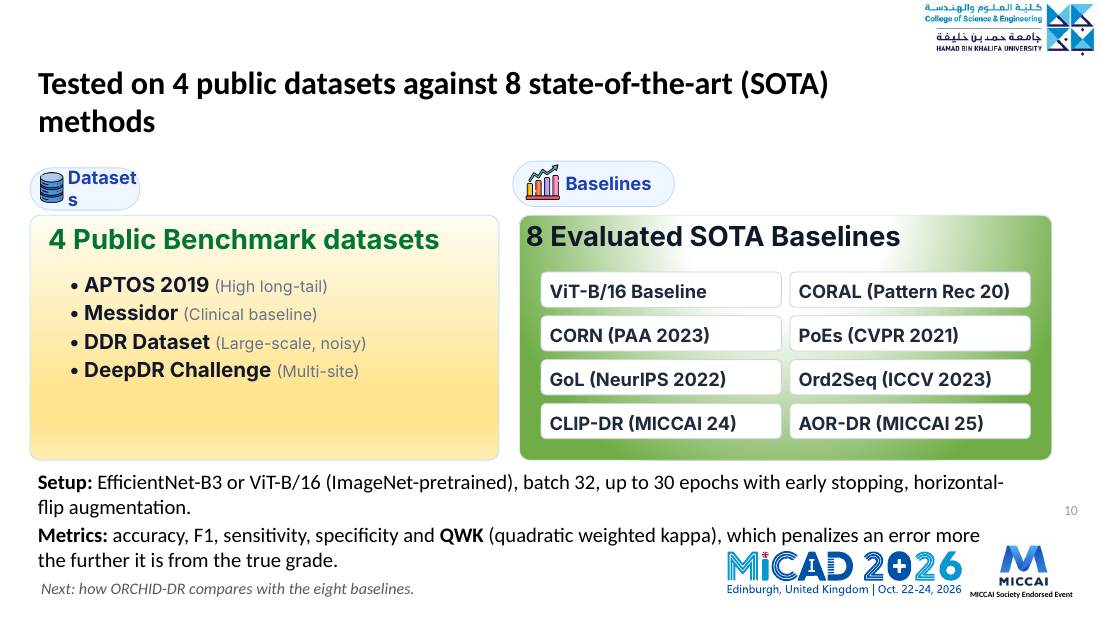
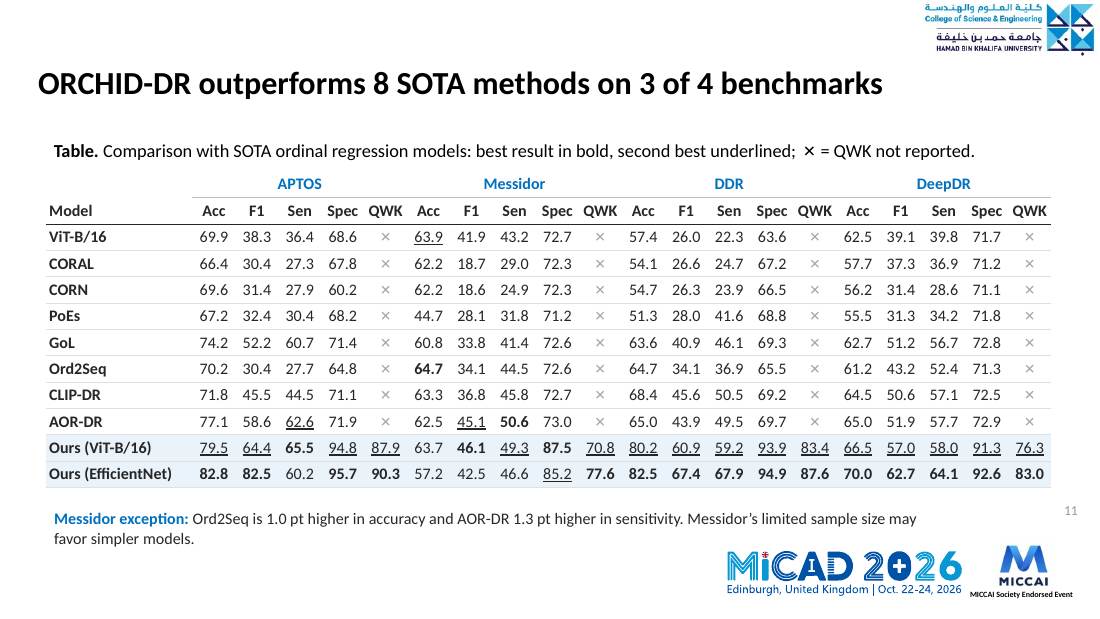
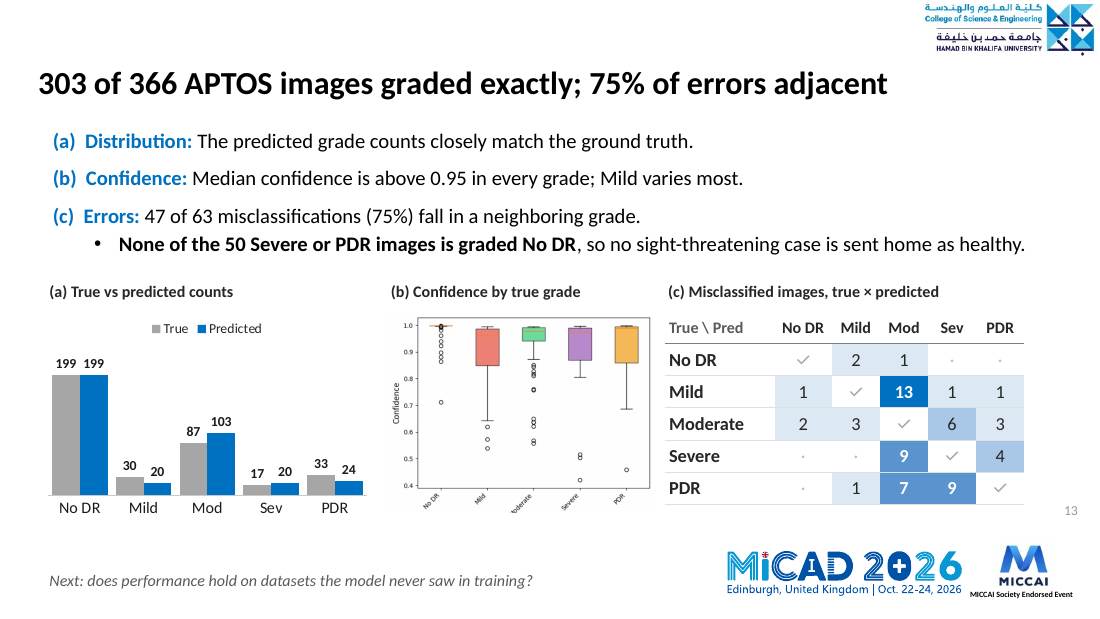
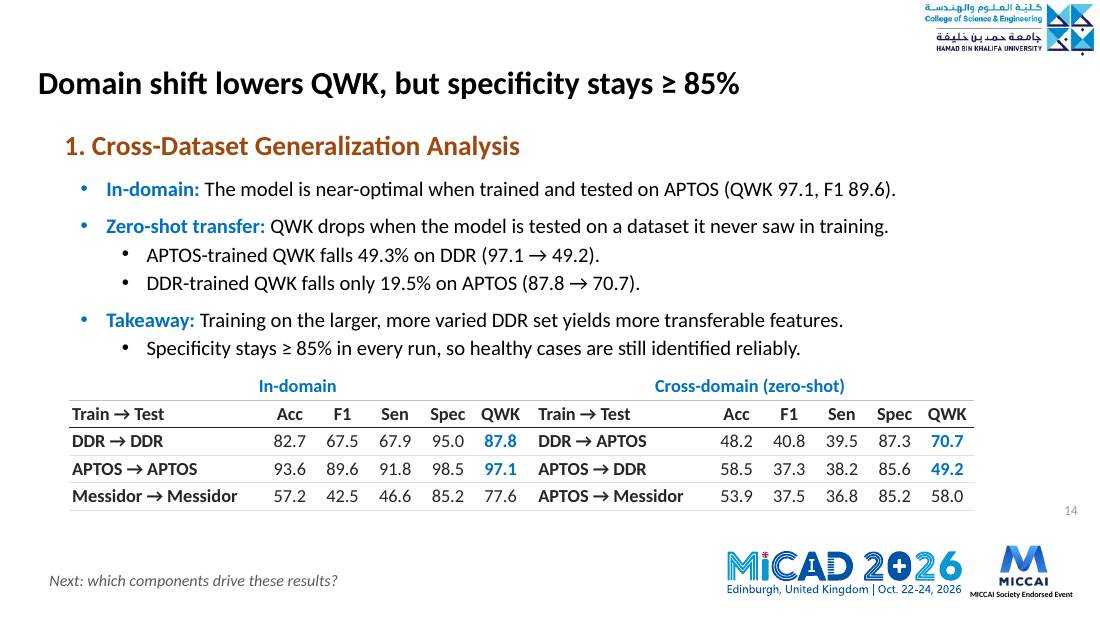
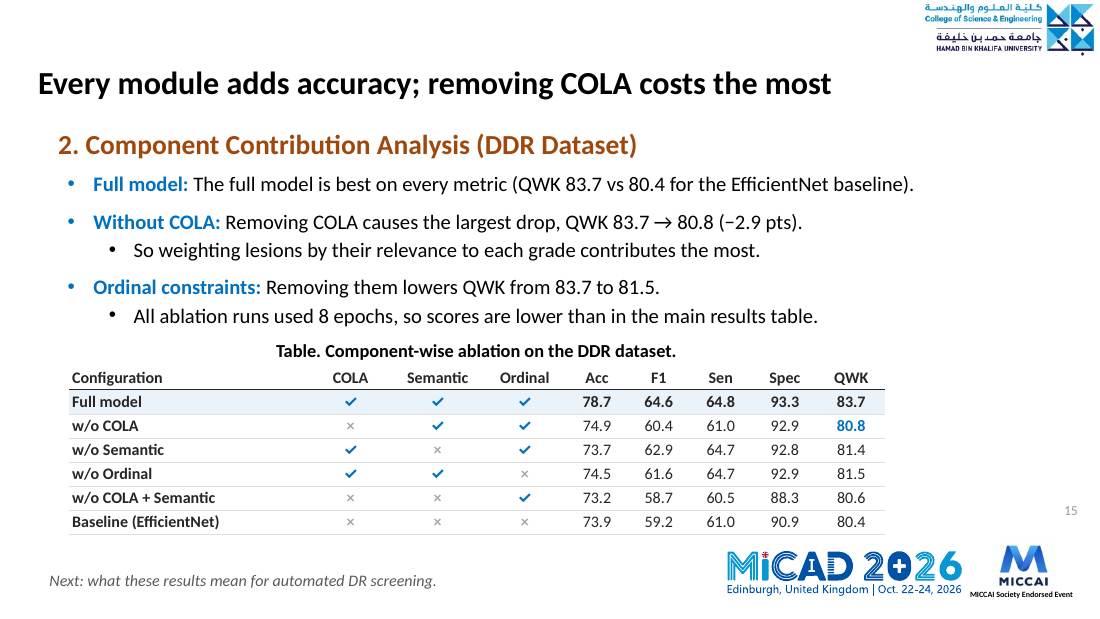
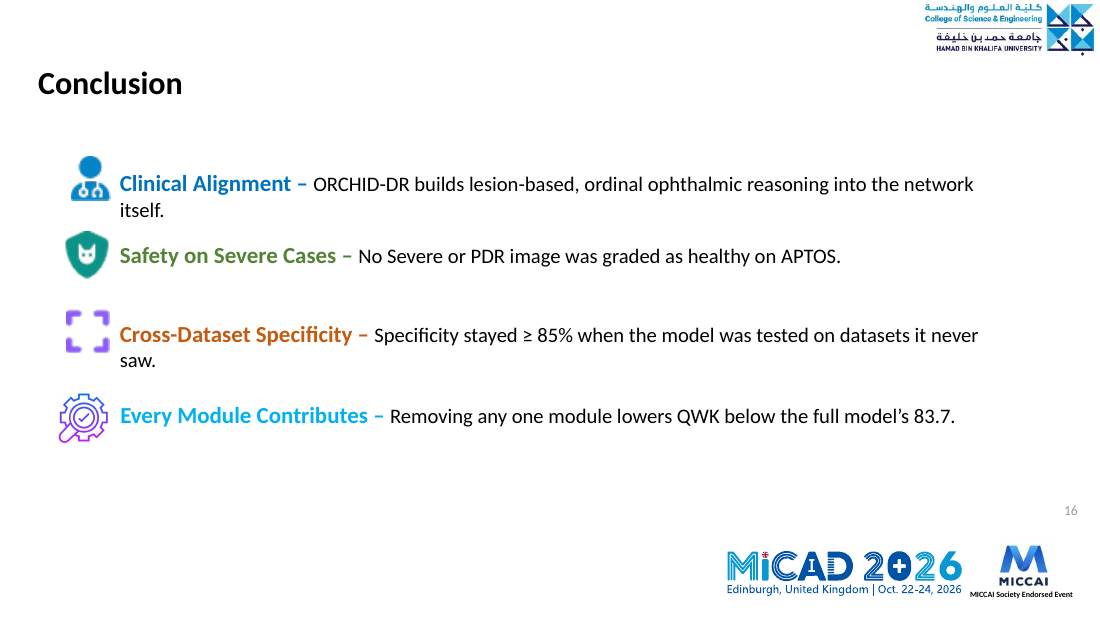
ORCHID-DR grades retinopathy the way a clinician reasons: step by step, asking whether an eye is worse than each grade in turn, and weighting the lesions that matter for each grade. Tested on four public datasets against eight state-of-the-art methods, it performed best on three, and no severe or proliferative case was graded as healthy on APTOS.